Frank Herbert Diuna
As a child, I read fantasy novels about dragons, wizards and magic. A little later came a fascination with science fiction, instilled by dad – a bookworm and an avid fantasy. I remember that one of the first books I read was Dune by Frank Herbert, with yellowed pages and a crumbling cover. I admit that the first time the novel did not captivate me, but it undoubtedly attracted me to the genre of SF, which I have reached more and more often since then. A few years and a lot of books later, I returned to my bloated volume and only then was the genius of its history struck by me. In Duneit is not so much about presenting fantastic worlds and advanced technology as about certain universal truths that go beyond any genre framework. In his magnum opus, Frank Herbert skillfully interweaves theology, esotericism, history and philosophy, revealing a new look at the nature of reality and the world around us. The mysterious spice mined on the planet allows you to expand the limits of human perception and go beyond the limits of the mind to come to a deeply hidden truth. However, the answer to the question about reality is more complex than it may seem. In order to reach it, you must both overcome personal barriers and connect with the planet itself, its people and unique fauna, which hide an almost divine particle. Equally important motifs in the novel are, among others family battles, space travel and a clear ecological aspect, but there would be no room to describe them all. Frank Herbert’s work is undoubtedly one of those that eludes even the most detailed descriptions. The contribution of “Dune” to the development of the genre, however, is so huge that every self-respecting SF enthusiast should become familiar with its content, especially before the premiere of the latest film adaptation.
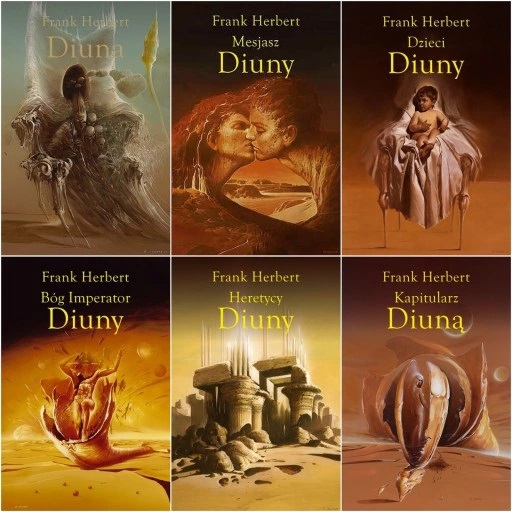
Source: allegro.pl